What if understanding melanoma depended not only on identifying which cells exist inside a tumor, but also on knowing where those cells are located and how their spatial organization influences biological behavior and treatment response?
This question lies at the core of spatial biology, an emerging field that leverages spatial transcriptomics and spatially resolved multiomics technologies, often in combination with single-cell sequencing, to study tumors as spatially organized biological systems with functional microenvironments.
May, observed as Melanoma Awareness Month, underscores the growing relevance of genomic technologies in advancing melanoma research, tumor immunology, and precision oncology. It also provides context for highlighting how spatial and multiomics approaches are improving resolution in cancer biology.
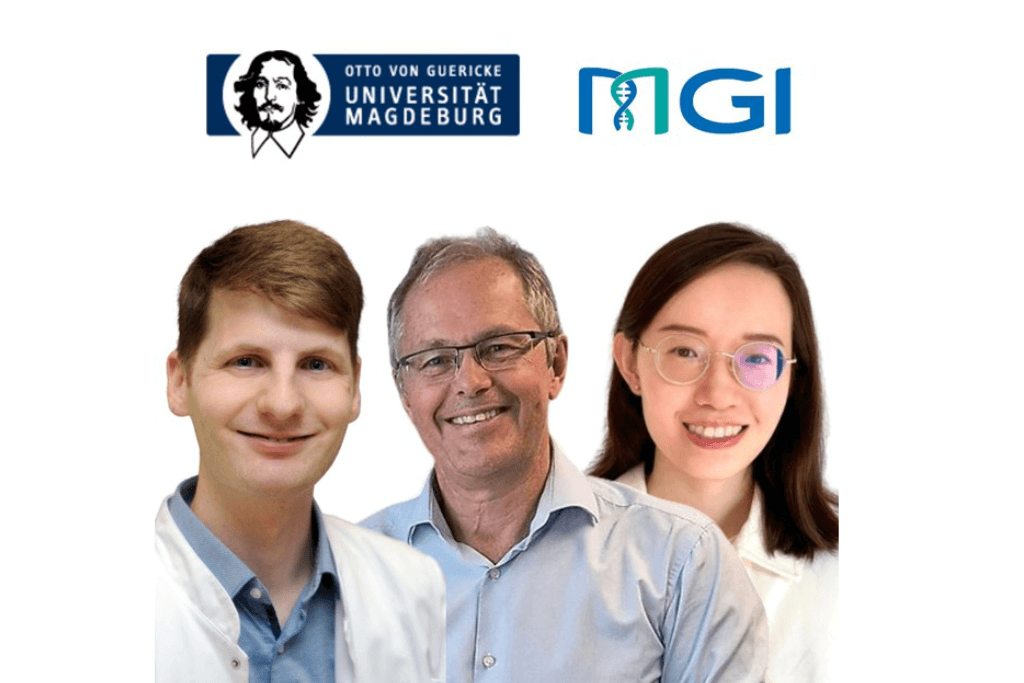
Researchers at the University Hospital Magdeburg and University Hospital Schleswig-Holstein (in Lübeck), are conducting a melanoma profiling study using clinically annotated samples from an institutional biobank. The work is supported by Dr. Jia Hui Khoo, Senior Product Manager at MGI Tech, who contributes expertise in spatial biology and enabling technologies. The study integrates DNA, cellular, spatial, and proteomic data through MGI’s DCSP framework to support translational cancer research.
Melanoma and Spatially Resolved Oncology
Melanoma has been central to the development of cancer immunotherapy, particularly immune checkpoint inhibition targeting PD-1 and CTLA-4. Despite significant therapeutic advances, clinical variability remains a key challenge, with marked differences in patient response and resistance.
This variability reflects the complexity of the tumor microenvironment, where immune cells, tumor cells, and vascular structures interact within spatially defined tissue contexts. As Professor Thomas Tüting notes, tumor behavior cannot be fully understood through malignant cells alone, but must be interpreted within its surrounding biological environment.
This reflects a broader shift in oncology: tumor behavior is increasingly understood as a product of spatial and functional context rather than isolated molecular alterations. Integrating spatial transcriptomics with single-cell and model-based systems allows researchers to investigate tumor heterogeneity, immune resistance, and treatment failure at a systems level.
Spatial Profiling of the Melanoma Tumor Microenvironment
A central component of the Magdeburg study is its melanoma biobank, comprising clinically annotated samples across disease stages and treatment conditions. This resource enables direct correlation between molecular profiles and clinical outcomes.
The project integrates approximately 50 STOmics spatial transcriptomics datasets with matched single-cell RNA sequencing data from both human melanoma samples and complementary mouse models. This combined design supports cross-species validation while maintaining translational relevance.
Spatial transcriptomics enables gene expression profiling while preserving tissue architecture, allowing detailed mapping of tumor regions, immune infiltration patterns, stromal compartments, and vascular structures. Within this framework, endothelial cells are of particular interest due to their role in regulating immune cell entry into tumors, with variations in vascular structure and signaling helping to explain why some melanomas are immunotherapy-responsive while others remain immune-excluded.
Why Spatial Context Matters
Spatial context is a defining principle in modern cancer biology. The concept of “cellular neighborhoods” or tissue “niches” highlights that cellular function is shaped not in isolation, but through continuous interaction with the surrounding microenvironment, as emphasized by Professor Tüting.
In melanoma, this spatial dependency becomes particularly critical, as tumor progression is influenced not only by genetic alterations but also by dynamic remodeling of tissue architecture. Variations in immune cell distribution, vascular accessibility, and stromal organization collectively determine whether anti-tumor immune responses are effectively activated or spatially constrained within the tumor microenvironment.
Within this framework, even cells with shared developmental origins can acquire distinct functional states depending on their spatial localization. This reinforces the concept that tumor behavior is governed by spatial organization as much as by molecular identity.
Technologies such as STOmics Stereo-seq enable high-resolution mapping of gene expression within intact tissue sections, preserving spatial relationships that are lost in dissociative approaches.
As highlighted by Dr. Jia Hui Khoo, spatial datasets require integrated interpretation across gene expression, protein activity, and spatial localization to understand tissue function as a coordinated system, marking a shift toward structured, ecosystem-level models of tumor biology.
MGI’s DCSP Multiomics Framework
The melanoma study demonstrates how MGI’s DCSP framework supports integrated multiomics research across DNA genomics, cell omics, spatial omics, and proteomics. Designed to align multiple layers of biological information within a unified workflow, the framework enables researchers to study tumor biology with greater molecular and spatial resolution.
Within the study, STOmics Stereo-seq enables spatially resolved whole-transcriptome profiling of melanoma tissue, helping identify immune landscapes, invasive tumor fronts, and hypoxic niches while preserving tissue architecture. Because the platform is unbiased and species-agnostic, researchers can analyze both human and mouse samples without redesigning targeted gene panels.
Single-cell sequencing provides deeper characterization of cellular identity and functional states, while proteomic integration adds a layer of biological insight in settings where RNA expression and protein abundance may not directly correlate. Researchers are also exploring integration with multiplex immunofluorescence approaches to further improve characterization of endothelial and immune cell populations within the tumor microenvironment.
According to Dr. Jia Hui Khoo, integrating these technologies within a single ecosystem may also help reduce technical variability across workflows, supporting more consistent and scalable translational research.
Together, these approaches generate spatially informed, high-dimensional datasets that capture tumor complexity with greater biological depth and context than conventional methods alone.
Toward the Future of Precision Oncology
The integration of spatial biology and multiomics is driving a broader transformation in oncology research. Tumors are increasingly understood as dynamic, spatially organized ecosystems rather than static molecular entities.
While these approaches remain computationally intensive, they are already enabling deeper insights into tumor heterogeneity, immune evasion, and therapeutic response.
As these technologies continue to mature, their integration into multiomics workflows is expected to further enhance the resolution of tumor biology, enabling clearer links between spatial heterogeneity and functional outcomes across diverse patient populations. In the long term, these advances are expected to strengthen biomarker discovery, improve patient stratification, and support more precise therapeutic development.
As Professor Andreas Braun noted, the goal remains fundamentally translational:
“At the end, we’re still trying to understand cancer to treat patients better in the future.”
By linking molecular insight with spatial context, spatial biology is helping bring precision oncology closer to that goal, one tissue landscape at a time.
To explore the full discussion on spatial biology, melanoma research, and the future of precision oncology, listen to the complete podcast episode.



precision medicine
Oncology
Melanoma
Spatial Biology
Share