Environmental DNA Sequencing: From Biodiversity Monitoring to Genetic Diversity
Oct 19, 2026
Share article


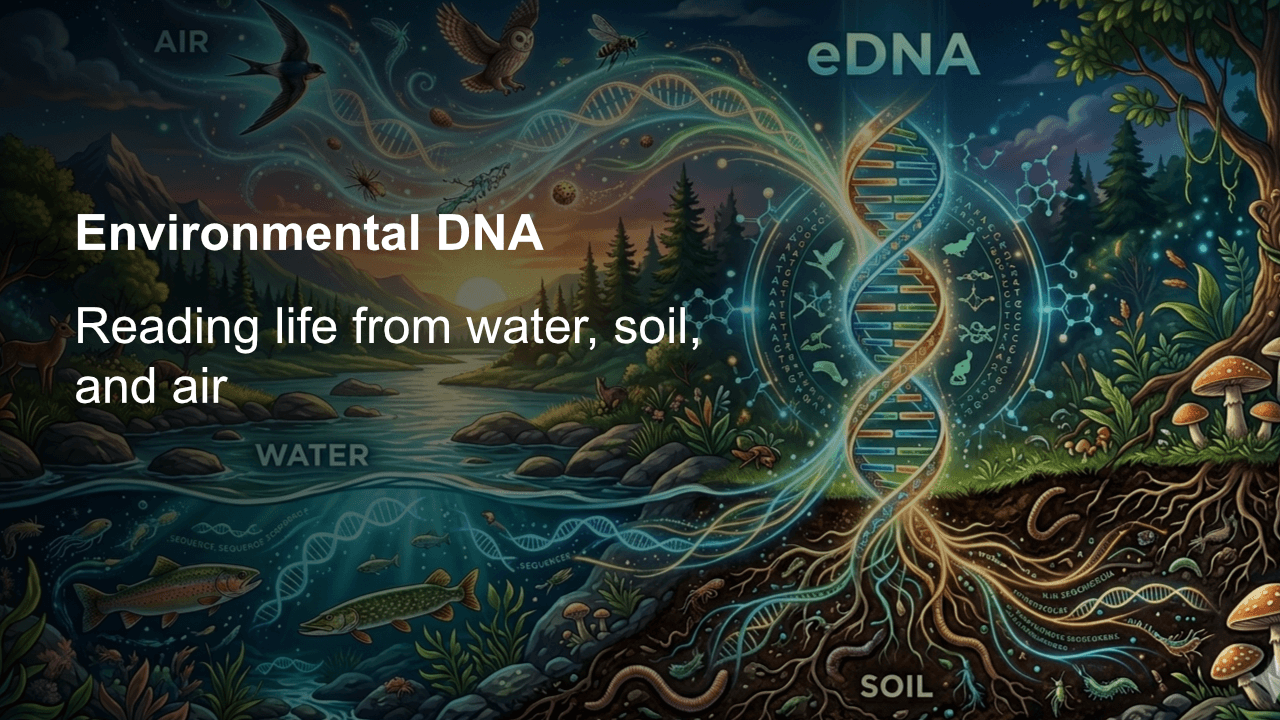
Environmental DNA is transforming biodiversity monitoring. Discover how next-generation sequencing can identify fish communities and, with appropriate markers, reveal genetic diversity within wild populations.
Key takeaways
eDNA can provide more than species detection.
eDNA metabarcoding can characterise fish communities from environmental samples.
High-throughput sequencing enables parallel analysis of DNA from multiple organisms.
Target selection matters: different genetic markers address different biological questions.
eDNA can contribute to the detection of rare and exotic species.
Appropriate markers and reference databases can extend eDNA applications toward intraspecific genetic diversity.
Environmental and technical factors must be considered when interpreting sequencing data.
DNBSEQ-G99 and DNBSEQ-G400 have both been used in peer-reviewed eDNA research.
Ultimately, the value of eDNA lies not simply in detecting DNA in the environment, but in transforming that DNA into meaningful biological information.
From environmental DNA to biodiversity insights
Monitoring biodiversity in aquatic ecosystems can be challenging. Traditional surveys may require fish capture, repeated field sampling and taxonomic expertise, while some species can be difficult to detect because of their rarity, behaviour or habitat.
Environmental DNA (eDNA) offers a complementary approach.
Organisms continuously release DNA into their environment through sources such as mucus, tissue, excretions and other biological material. In aquatic environments, this DNA can be collected from water samples and analysed using molecular methods.
Combined with targeted amplification and next-generation sequencing, eDNA metabarcoding can provide information about the organisms present in an ecosystem without necessarily requiring them to be physically captured.
Recent research illustrates how far this approach can extend.
Two studies provide complementary examples: a 2024 study investigating fish biodiversity and community structure in the Danjiang River in China, and a 2026 study assessing mitochondrial lineage diversity in wild brown trout populations in Italy. Together, they demonstrate how eDNA sequencing can support biodiversity monitoring at both the community level and the genetic level.
What is eDNA metabarcoding?
Environmental DNA metabarcoding combines environmental DNA sampling with PCR amplification of selected genetic markers and high-throughput sequencing.
A simplified workflow can be represented as:

Rather than sequencing an entire organism's genome, researchers generally target specific DNA regions that are informative for the biological question being investigated.
The choice of marker is therefore critical.
For example, mitochondrial 12S rDNA markers are widely used for fish identification, while other mitochondrial regions can be selected when the objective is to investigate genetic lineages within a species.
This distinction is important: eDNA metabarcoding is not a single application, but a flexible molecular approach whose information content depends on the sampling strategy, marker, reference database, sequencing and bioinformatics workflow.
Case study 1: Mapping fish biodiversity in the Danjiang River
In a 2024 study published in Scientific Reports, Deng et al. used eDNA metabarcoding to investigate fish diversity and community structure in the Danjiang River basin in Shaanxi Province, China.
The researchers analysed water samples collected from four locations and used a fish-specific metabarcoding approach targeting a short region of the mitochondrial 12S rDNA.
The workflow included PCR amplification using MiFish primers, library preparation and paired-end sequencing on the MGI DNBSEQ-G99 platform. The study also incorporated negative controls and bioinformatic processing using tools including DADA2 and QIIME 2.
Detecting fish diversity from water
The study identified 59 fish species, representing:
8 orders
19 families
40 genera
Eight rare species and two exotic species were also identified. The authors reported that eDNA metabarcoding detected significantly more fish species than the traditional ground-cage sampling data used for comparison.
Beyond simply detecting species, the researchers examined differences in community composition between sampling locations.
Their analysis indicated that environmental parameters including temperature, pH and oxidation-reduction potential were associated with spatial patterns in fish communities.
This illustrates an important capability of eDNA metabarcoding: sequencing data can be used not only to build a species inventory, but also to investigate how biological communities vary across an ecosystem.
Why this matters for biodiversity monitoring
For conservation scientists and environmental researchers, being able to characterise multiple species from environmental samples can provide valuable information for ecosystem assessment.
The Danjiang River study demonstrates how an eDNA metabarcoding workflow can contribute to:
fish species inventories;
detection of rare or exotic species;
comparison of community composition between locations;
assessment of environmental factors associated with community structure;
non-invasive biodiversity monitoring.
However, the authors also highlight an important limitation: local reference databases need to be improved to support reliable taxonomic assignment, particularly for species that may be poorly represented in existing databases.
Case study 2: Going beyond species detection with brown trout
The second study takes the application one step further.
In a 2026 Scientific Reports publication, Talarico et al. investigated whether eDNA could be used to characterise mitochondrial lineage diversity within wild brown trout populations.
The researchers studied 10 sites in central Italian watercourses and compared eDNA-derived genetic information with conventional mitochondrial genotyping of trout collected by electrofishing.
Instead of simply asking:
Is brown trout present?
the researchers asked a more detailed question:
Which mitochondrial lineages are represented in the population?
From species identification to intraspecific genetic diversity
The study targeted a 192-bp fragment of the mitochondrial Control Region using custom primers.
Water samples were collected, filtered and subjected to DNA extraction. The target region was amplified and sequenced using paired-end 150 bp sequencing on the MGI DNBSEQ-G400.
The resulting sequences were analysed using a curated reference database and a bioinformatics workflow based on tools including Cutadapt and QIIME 2/DADA2.
The researchers detected 12 mitochondrial haplotypes belonging to five lineages.
Most importantly, the eDNA-derived lineage frequencies showed a strong correlation with the frequencies obtained through conventional tissue-based genotyping: Pearson r = 0.93; p < 0.0001.
The composition of mitochondrial lineages identified through the two approaches also showed strong agreement.
These results provide evidence that appropriately designed eDNA sequencing approaches can potentially move beyond species-level detection and provide information about intraspecific genetic diversity.
Two studies, two levels of biodiversity information
Taken together, these publications illustrate two complementary dimensions of eDNA sequencing.
Biological question | Example | Molecular approach |
Which species are present? | Fish communities in the Danjiang River | Fish-specific 12S metabarcoding |
How does community composition vary? | Different Danjiang River sites | eDNA community profiling |
Which genetic lineages are present within a species? | Brown trout populations in Italy | Mitochondrial Control Region sequencing |
How closely does eDNA reflect conventional genetic sampling? | Brown trout | Comparison with tissue-based genotyping |
This progression is particularly interesting for biodiversity research.
eDNA can provide information at multiple biological scales, provided that the sampling design, genetic marker, reference database and analytical workflow are appropriately matched to the research question.
The role of next-generation sequencing
High-throughput sequencing is a key component of these workflows because environmental samples can contain DNA originating from multiple organisms.
In the Danjiang River study, the researchers used DNBSEQ-G99 paired-end sequencing to process fish metabarcoding libraries targeting the mitochondrial 12S region.
In the brown trout study, DNBSEQ-G400 paired-end sequencing was used to analyse a targeted mitochondrial Control Region fragment and characterise lineage diversity.
These examples illustrate how different DNBSEQ platforms can be integrated into targeted sequencing workflows depending on sample numbers, experimental design and research objectives.
The value of the sequencing platform, however, cannot be considered independently from the rest of the workflow. Primer selection, DNA extraction, PCR amplification, contamination controls, sequencing depth, reference databases and bioinformatics all influence the quality and interpretation of eDNA results.
eDNA is powerful, but interpretation matters
The two studies also highlight why eDNA results should be interpreted carefully.
Detection does not necessarily equal abundance
The brown trout study found no significant relationship between sequencing read counts and trout abundance estimated through electrofishing. The authors therefore caution against interpreting read counts as a direct measure of population abundance.
Similarly, the Danjiang River study focused primarily on species richness and community composition rather than treating sequence counts as a direct census of fish populations.
DNA shedding, transport through water, degradation, PCR amplification and other technical and environmental factors can all influence the amount of DNA recovered.
Reference databases remain essential
Accurate taxonomic or lineage assignment depends on the quality of the reference database.
The Danjiang River researchers specifically highlighted the need to improve local reference databases, while the brown trout study relied on a curated reference database to assign mitochondrial variants to lineages.
Contamination must be controlled
Because eDNA approaches analyse very small quantities of DNA from environmental samples, contamination control is particularly important.
The brown trout researchers incorporated negative controls during several stages of the workflow and discussed the possibility of false positives and low-frequency lineage discrepancies.
These considerations demonstrate that successful eDNA research requires more than sequencing alone: experimental design and analytical validation are fundamental to reliable biological interpretation.
From biodiversity inventories to conservation genetics
The potential applications of these approaches extend across freshwater, marine and terrestrial ecosystems.
At the community level, eDNA metabarcoding can support biodiversity inventories, ecosystem monitoring and the detection of rare or non-native species.
At the population level, appropriately selected genetic markers may provide information about genetic lineages and intraspecific diversity.
For conservation programmes, these complementary levels of information can help researchers investigate questions such as:
Which species are present in a habitat?
How does community composition change between sites?
Which rare or non-native species can be detected?
Which environmental factors are associated with community structure?
Which genetic lineages are represented within a population?
How can biodiversity be monitored with reduced dependence on physical capture?
The brown trout study, for example, suggests that eDNA-based lineage monitoring could support conservation assessments and help identify populations of particular interest for conservation or genetic management.
The future of eDNA sequencing
The combination of environmental sampling, targeted molecular assays, high-throughput sequencing and bioinformatics is opening new possibilities for biodiversity research.
The two studies discussed here demonstrate this evolution particularly well.
The Danjiang River research shows how eDNA metabarcoding can provide a detailed picture of fish community diversity and spatial structure.
The brown trout research demonstrates that, with an appropriately designed marker and reference database, eDNA can also provide information about genetic diversity within a species.
As sequencing technologies, reference databases and analytical methods continue to develop, eDNA has the potential to become an increasingly valuable component of biodiversity and conservation research.
How MGI supports eDNA sequencing research
MGI sequencing technologies can be integrated into targeted amplicon and metabarcoding workflows for environmental DNA research.
The publications discussed in this article provide concrete examples of DNBSEQ sequencing applied to eDNA research:
DNBSEQ-G99 was used for fish eDNA metabarcoding in the Danjiang River study.
DNBSEQ-G400 was used to investigate mitochondrial lineage diversity in wild brown trout populations.
Both studies combined targeted mitochondrial markers with high-throughput sequencing and downstream bioinformatics analysis.
For researchers investigating biodiversity, conservation genetics or environmental monitoring, this illustrates how DNBSEQ sequencing can form part of workflows designed around different biological questions, from community-level metabarcoding to targeted genetic diversity analysis.
References:
Deng, J., Zhang, X., Yao, X. et al. (2024). eDNA metabarcoding reveals differences in fish diversity and community structure in Danjiang River. Scientific Reports, 14, 29460. DOI: 10.1038/s41598-024-80907-z.
Talarico, L., Petrosino, G., Rossi, A. R., Franchini, P., Gratton, P., & Tancioni, L. (2026).Efficient eDNA-based assessment of mitochondrial lineage diversity in wild brown trout populations.Scientific Reports, 16, 317. DOI: 10.1038/s41598-025-29560-


Share this article :
Share
