Back to Testimonies
Exclusive Interview with Professor Dr. Hans Lehrach, Former Director of the Max Planck Institute for Molecular Genetics
Dec 3, 2020
Share

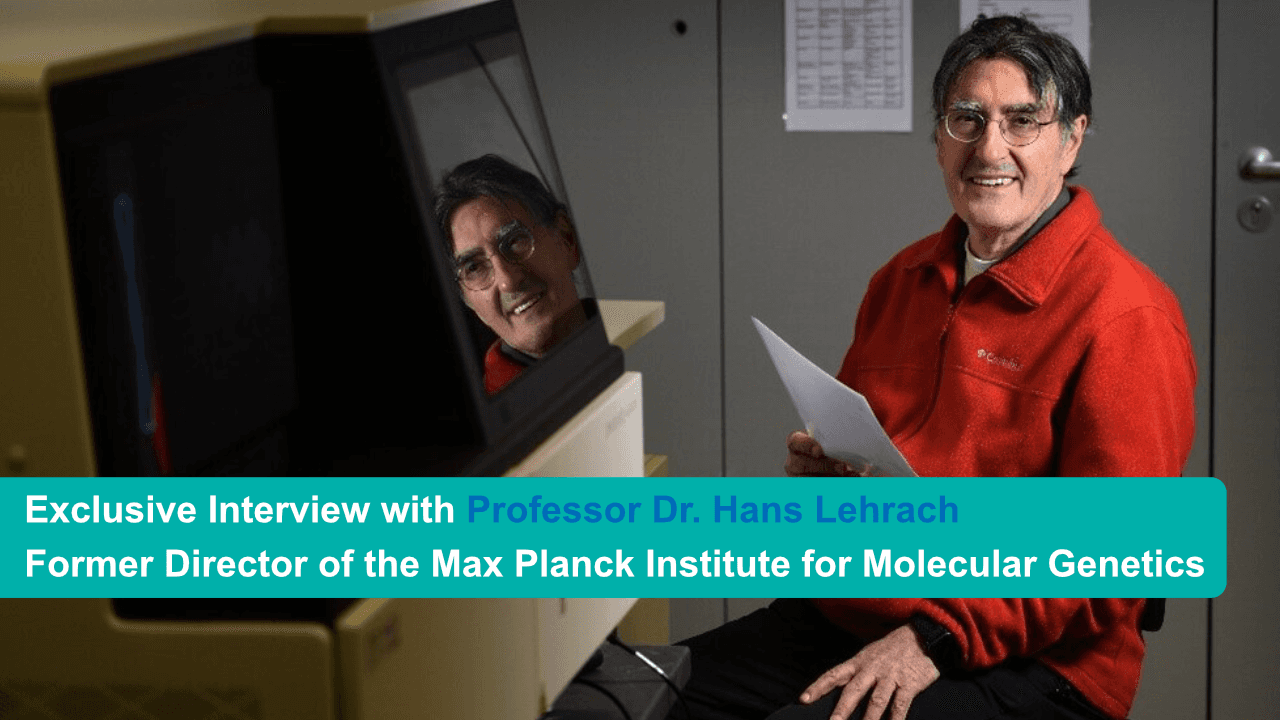
In 1978, as a group leader at the European Molecular Biology Laboratory in Heidelberg, Professor Lehrach helped develop positional cloning strategies and the first phage vectors and yeast artificial chromosomes for genomic library cloning. In 1987, as head of the Genome Analysis department at the Imperial Cancer Research Fund (ICRF) in London, he successfully mapped the Huntington’s disease gene on chromosome 4. At ICRF, he designed and built the first picking and spotting array robots and implemented hybridization fingerprinting technology for genome mapping and sequencing. In 1994, he joined the Max Planck Society in Germany as Director of the Institute for Molecular Genetics in Berlin-Dahlem. During this period, he contributed to the International Human Genome Sequencing Consortium, finalizing the sequencing of chromosomes 8 and 21. Professor Lehrach is also a co-founder of several successful biotech companies in Germany.
He currently uses MGI DNBSEQ™ technology to advance clinical DNA sequencing applications, moving from whole exome to whole genome sequencing in cancer and other diseases. Danilo Tait, Business Development Director for MGI Europe, recently conducted an interview with Professor Lehrach.
Q: 25 years have passed since I joined your team as a PhD student at the Imperial Cancer Research Fund in London. Many researchers there, including Rade Drmanac, MGI’s Chief Scientific Officer who invented your sequencing technology, have become key opinion leaders in genomics. How much has the approach to genomics changed since then?
A: Quite a bit. Back then, we were in the early stages of the Human Genome Project, preparing to sequence the first genome over 13 years at a cost of more than 3 billion euros. Now, the fastest machine available, the DNBSEQ-T7, can sequence 60 genomes in a day at a few hundred dollars per genome. In a short time, we’ve gone from knowing very little about the human genome to understanding more about individual differences than we knew about all of human biology decades ago.
Q: In 1995, you moved to Germany as Director of the Max Planck Institute for Molecular Genetics. What differences did you notice between the two countries regarding genomics?
A: The UK was, and in some ways still is, more open to genomic approaches, perhaps because of Germany’s historical concerns linking genetics and eugenics.
Q: England has promoted ambitious genomics and personalized medicine projects, while Germany still debates a national genome initiative. Do these differences still exist?
A: Definitely. The UK remains ahead. Differences in healthcare system organization—the NHS in the UK versus Germany’s fragmented system—also play a role.
Q: What is the risk to Germany and other European countries if they do not adopt national genome projects like those in England, the U.S., France, or China?
A: National genome projects are a key step toward true personalized therapy and prevention. Everyone is genetically different, with varying environments and disease histories. This explains why individuals respond differently to treatments, sometimes with catastrophic consequences. This contributes to nearly 200,000 adverse drug reaction deaths annually in Europe, along with soaring healthcare costs—4.5 billion euros per day in Europe. Better understanding individual responses could dramatically improve medical outcomes.
Q: Regarding COVID-19, Germany responded better than England despite expectations. Why do you think that is?
A: Surprisingly, centralized systems like the NHS are more sensitive to top-level errors influenced by public relations rather than data. Germany’s decentralized system, though complex, may avoid some of these pitfalls.
Q: You and George Church proposed a surveillance approach by sequencing both virus and host as a pandemic solution. Can you explain?
A: Unlike HIV, SARS-CoV-2 either resolves or kills the host. This vulnerability could allow regional elimination via synchronized population-wide testing and quarantine until individuals are no longer infectious. While logistically challenging, this approach is feasible and much cheaper than prolonged lockdowns.
Q: Are laboratories ready for such large-scale sequencing programs?
A: Pure sequencing costs could be only a few euros per person—much cheaper than current tests—and far more efficient than the economic cost of prolonged lockdowns.
Q: Viral infection affects age groups differently. Does this support personalized medicine?
A: Absolutely. Personalized medicine is inherently more effective and cost-efficient than one-size-fits-all approaches, especially evident in COVID-19 responses.
Q: How will the DNBSEQ-T7 impact personalized medicine?
A: The T7 is faster, cheaper, and more powerful than competitors. This progress supports therapy personalization, initially in oncology, and broader applications including infectious disease management.
Q: How does DNA sequencing support “Digital Twins” at Alacris Theranostics?
A: Digital Twins model each patient’s biology using deep molecular analyses of tissue, immune response, and disease history. High-performance sequencing like MGI’s enables precise predictions of therapy effects and side effects without endangering real patients.
Q: Where do you see genomics and personalized medicine in 25 years?
A: Medicine will be fully personalized, guided by Digital Twins. Drug development will be faster and cheaper, and we’ll have moved from a Ptolemaic “one-size-fits-all” view to a Copernican understanding of individual biology, leaving today’s limitations behind.
Personalized medicine
Population genomics
Oncology
Share this article :