Sitges, Spain, 28 September 2026 - MGI Tech (MGI) today launched its Stereo-seq OMNI Large Chip Design for formalin-fixed, paraffin-embedded (FFPE) samples at the third Conference of the European Society for Spatial Biology (ESSB), held from 28 September to 1 October at Hotel Meliá Sitges near Barcelona. The launch extends MGI's spatial transcriptomics portfolio to address research questions that require a broader view of tissue architecture.
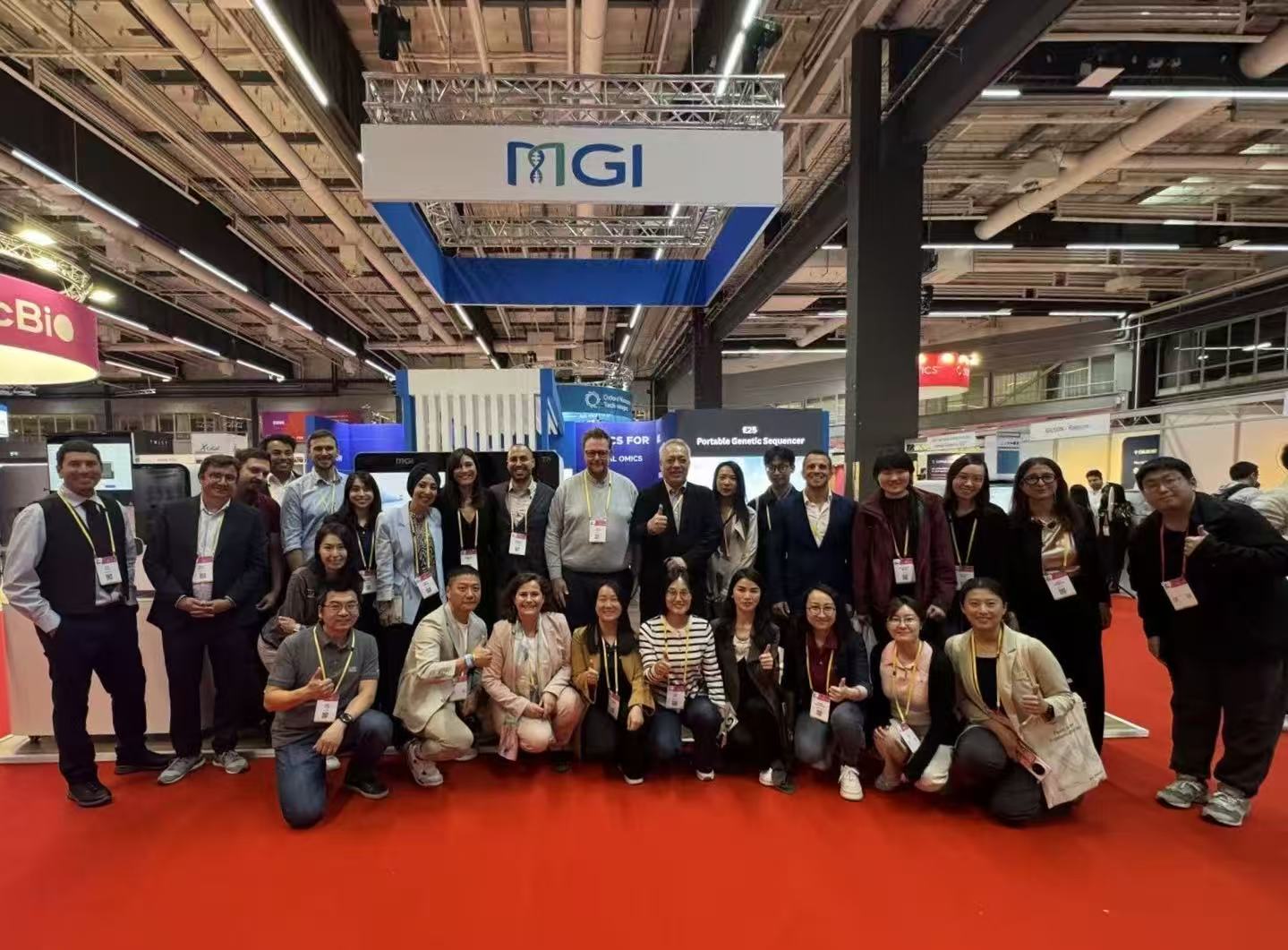
At ESSB 2026, researchers will discuss spatial immunology, cancer, spatial medicine, computational biology, and emerging technologies. MGI will present the FFPE large-chip design, Stereo-seq use cases, single-cell technologies, and VisiOmics (PMIF-20RS) for spatial proteomics. Visitors can meet the team at booth 21.
Extending Spatial Analysis Across Larger FFPE Sections
FFPE tissue is widely used in research because it preserves morphology and support studies of archived specimens. These collections provide valuable material for studying disease progression and variation between samples. Standard capture areas, however, can limit the view of larger or structurally diverse sections. Stereo-seq OMNI Large-Chip Design is intended to let researchers examine more of a tissue section within a single spatial experiment, helping them place local gene-expression patterns in a broader anatomical context.
The design builds on Stereo-seq OMNI V1.1, MGI's spatial transcriptomics solution for FFPE samples. It is designed for chip formats up to 2 cm by 3 cm and for studies that need to profile larger tissues, multiple sections, or tissue microarray layouts. By linking molecular measurements with tissue morphology, the approach can help researchers compare regions within a sample and investigate how cell populations are distributed across them. A wider capture area may also reduce the need to piece together data from separate tissue regions when a research question depends on their relationship.
Supporting Research From Tissue to Data
Larger capture areas can be particularly useful when tissue features extend beyond a conventional field of view. In cancer research, for example, investigators may want to examine tumor regions together with surrounding tissue, including the boundaries where cell populations interact. In developmental biology and immunology, they may need to follow cell states or immune organization across a broader section. The new design is intended to give these projects more room to ask spatial questions while retaining the resolution needed to study local patterns.
MGI will also present the broader Stereo-seq workflow at the meeting. Stereo-seq OMNI supports total-RNA profiling of FFPE tissue, while Go Spatial automates post-imaging sample preparation for both FFPE and fresh frozen samples. StereoLink is an FFPE tissue-transfer solution designed to assist H&E-guided transfer from standard glass slides to Stereo-seq chips. Early access opportunities for StereoLink are available; researchers can speak with the MGI team at booth 21 to learn more. Together, these tools address distinct steps in preparing, profiling, and interpreting tissue samples.
MGI will also highlight VisiOmics (PMIF-20RS), its automated multiplex immunofluorescence staining and imaging system for spatial proteomics. It maps protein markers and cell phenotypes in tissue sections, including FFPE samples, providing a complementary protein-level view alongside Stereo-seq spatial gene-expression data.
“Researchers increasingly need to see how molecular signals relate across larger tissue areas,” said Fang Chen, Vice President of MGI and General Manager of Europe & Africa at MGI. “The FFPE large-chip design is intended to help them study those relationships within a wider spatial context.”
The ESSB launch will give researchers an opportunity to discuss sample selection, study design, and analysis needs directly with MGI specialists. Such conversations matter because tissue dimensions, quality, and the location of features of interest all influence how a spatial study is planned. MGI will share scientific presentations and application examples during the conference, showing how spatial data can be combined with other molecular approaches to investigate tissue heterogeneity.
Connecting With the European Spatial Biology Community
The ESSB conference brings together researchers developing and applying spatial methods across disciplines. Its program includes talks, posters, panel discussions, and working group sessions intended to encourage exchange between established investigators and early-career scientists. This setting gives technology developers a chance to hear directly about the demands of real research projects, from sample preparation to data interpretation. MGI's participation reflects its ongoing engagement with this community and its interest in the practical challenges of running spatial studies at scale.
Following the European launch of Go Spatial at STOC 2026, MGI is using ESSB to introduce a complementary option for FFPE tissue research. The company will continue to work with research groups and service partners to improve access to spatial transcriptomics technologies and support their use in biologically complex samples.


Spatial biology
Omics
Share